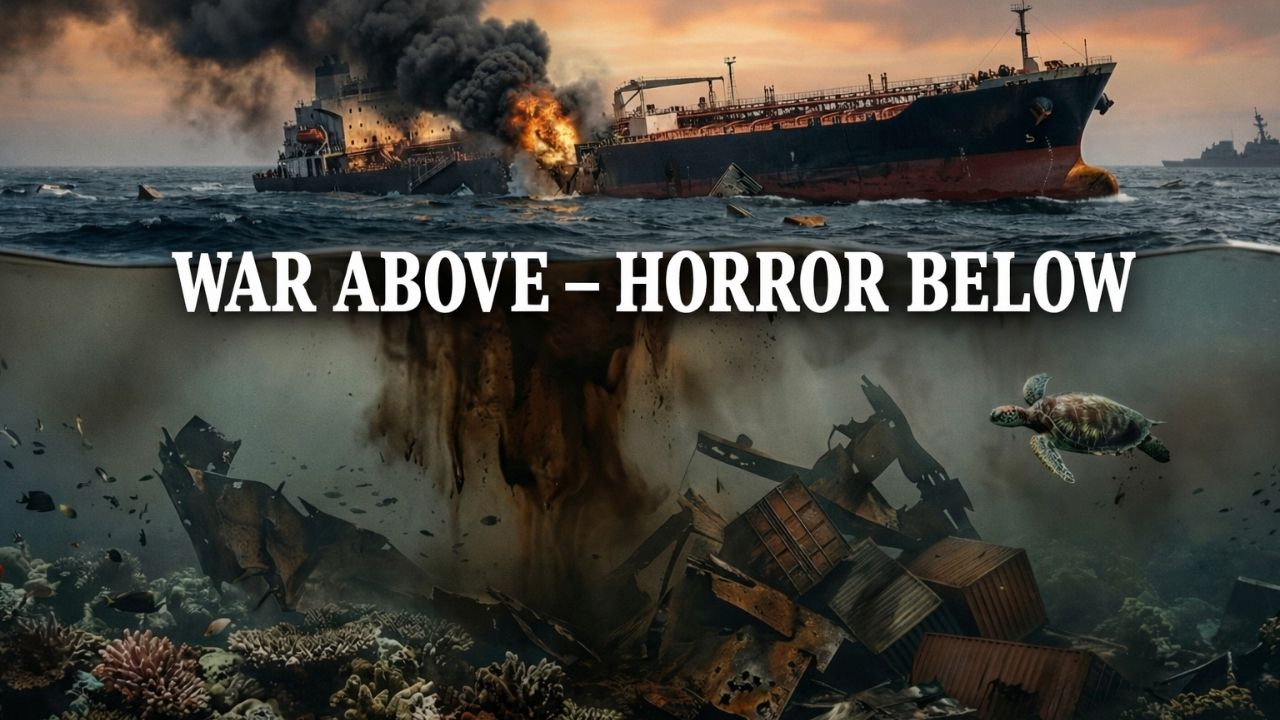
When we visualize the devastating horrors of the US-Iran war, our minds instinctively project images of shattered cities, intercepted missiles lighting up the night sky, and cratered military bases. We look at the skies and the land. But right now, a terrifying and largely silent catastrophe is unfolding where no one is looking: deep in the middle of the ocean. The proxy warfare between American forces and Iranian-backed fleets has transformed vital global waterways into dark, toxic maritime graveyards.
As commercial cargo ships and heavy oil tankers are caught in the crossfire of ballistic missiles and drone strikes, the collateral damage is not just economic. It is the catastrophic destruction of our planet’s most vital and fragile ecosystems. The ocean is rapidly turning into a heavily polluted war zone, and the countless marine creatures living within it have absolutely nowhere to hide. This is the real-life horror story of how modern warfare is violently suffocating nature.
The Sinking Giants and the Toxic Bleed
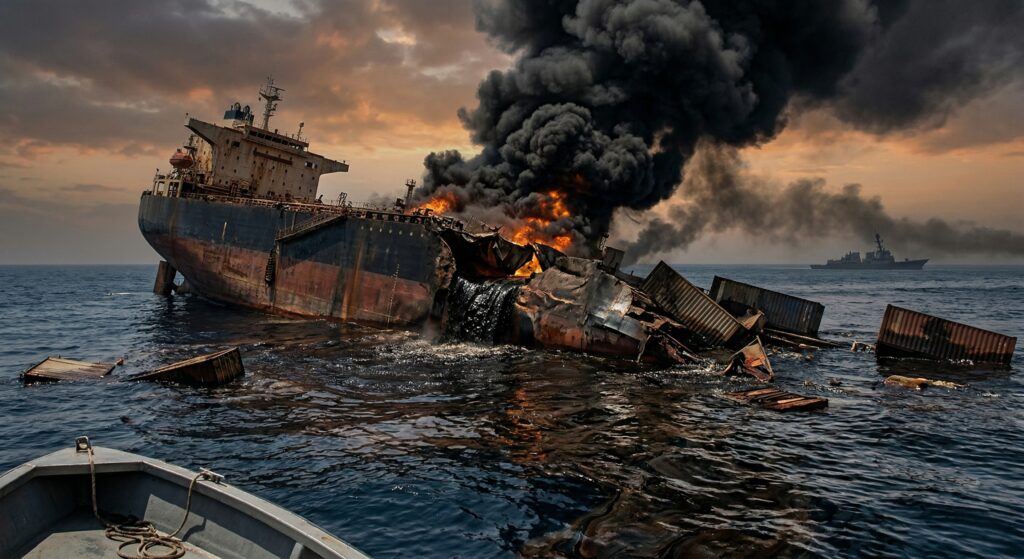
When a commercial mega-ship carrying millions of barrels of crude oil or heavy fuel is blown open by a tactical missile strike, the ocean literally bleeds. The sheer force of the explosions rips through thick steel hulls, violently dumping tens of thousands of gallons of toxic, viscous sludge into previously pristine waters. This is not a simple, manageable spill; it is a suffocating, lethal blanket.
Take, for example, the tragic fates of the Rubymar and the Magic Seas, massive bulk carriers that were struck by missiles and sank in the Red Sea over the last two years. When ships like these go down, they leave behind massive oil slicks that stretch for dozens of miles. The heavy oil coats the surface of the sea, completely blocking out life-giving sunlight and poisoning the entire water column below.
For the marine life caught in the immediate vicinity, the experience is nothing short of a nightmare. Sea turtles, dolphins, and thousands of species of fish are suddenly forced to navigate through a lethal, burning chemical slick. The oil coats their gills, destroys the water-resistant properties of marine bird feathers, and slowly poisons the animals that inadvertently ingest it. It is a slow, agonizing death for creatures that play no part in human conflicts.
The Silent Choke of Chemical Fertilizers
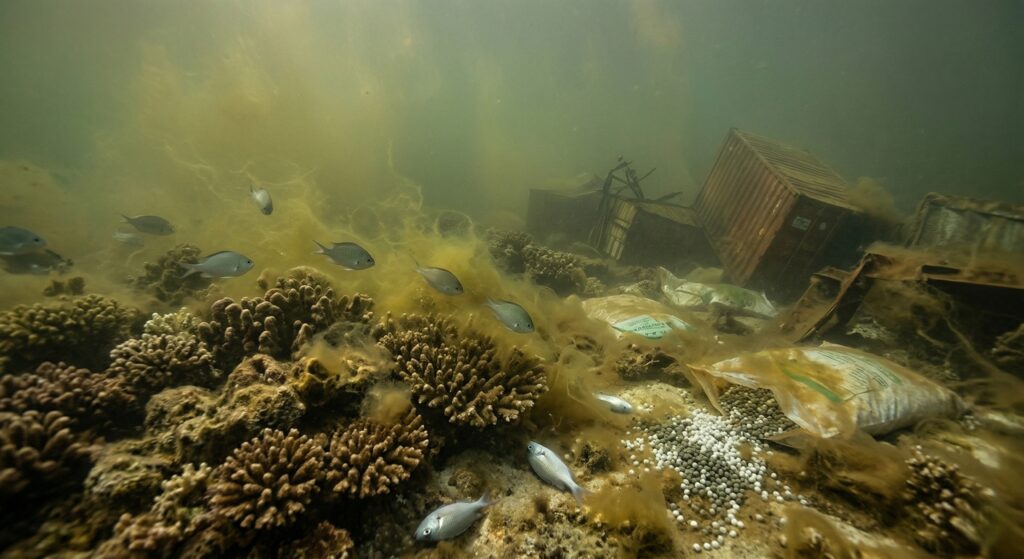
The horror, however, extends far beyond oil. Modern cargo ships carry unimaginable quantities of hazardous industrial materials. When a ship goes to the bottom, it can take tens of thousands of metric tons of highly toxic agricultural fertilizers down with it.
When synthetic chemicals of this magnitude dissolve into the open ocean, the biological reaction is devastating. The sudden influx of concentrated nutrients triggers massive, unnatural, and aggressive algae blooms. These toxic blooms rapidly spread across the water, blocking out the sun and aggressively sucking all the dissolved oxygen out of the surrounding sea.
This process creates massive underwater “dead zones.” In these oxygen-depleted areas, survival is impossible. Any creature caught within the expanding radius of a dead zone—from the microscopic plankton that form the foundation of the marine food web to massive apex predators—literally suffocates to death in their own home. It is an invisible, creeping killer that eradicates entire generations of marine life long after the initial explosions have stopped echoing.
A Graveyard of Shattered Steel and Crushed Coral
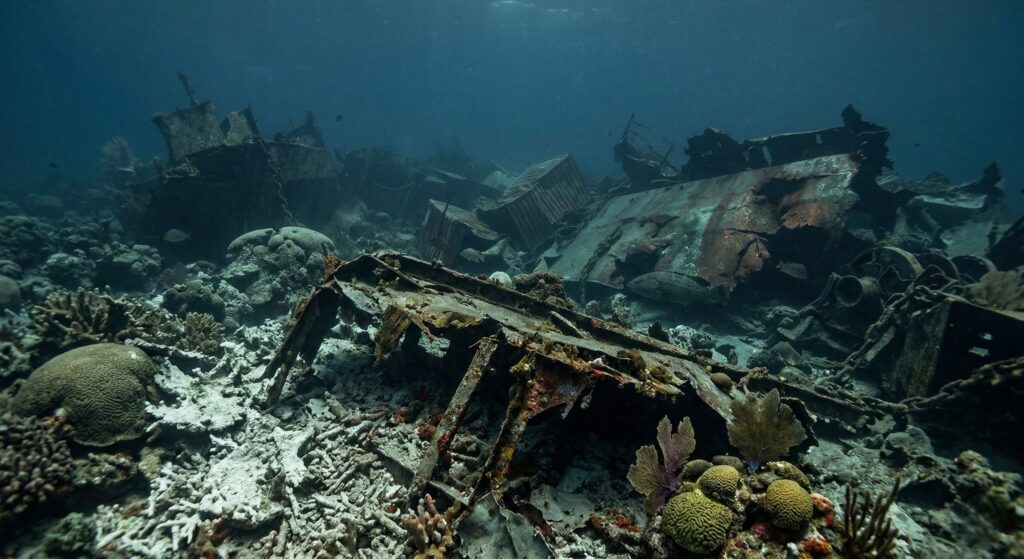
What happens to the colossal ships themselves once the fires burn out and the vessels surrender to the depths? They plunge thousands of tons of jagged, scorched steel, heavy industrial machinery, microscopic plastics, and corrosive battery acids down to the ocean floor.
These sunken leviathans do not land gently. They crash violently into the seabed, often obliterating delicate, centuries-old coral reefs, crushing them into fine dust. While reefs around the globe are already bleaching and dying due to rising global temperatures, the deep-water corals in these conflict zones are being physically obliterated by sinking wreckage and smothered by highly soluble chemical toxins. In the blink of an eye, an ancient, resilient ecosystem that took thousands of years to meticulously build is wiped off the map.
The Unseen Casualties of Human Conflict
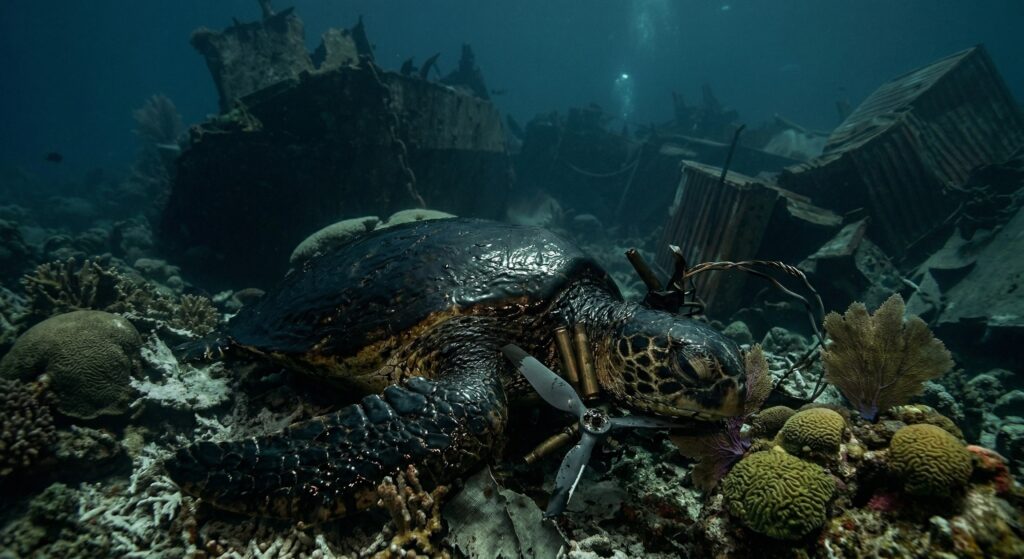
Ultimately, nature is absorbing the most brutal and unforgiving blows of this war. The concept of “double pollution”—from both oil and dissolved cargo—is actively contaminating fish populations, causing marine reproductive cycles to fail entirely, and rendering local waters incredibly toxic.
We are systematically poisoning the very nature that sustains our existence, turning vibrant, biodiverse blue ecosystems into dark, silent graveyards. When humanity goes to war, the casualties are not just soldiers and civilians. The deepest, most unforgiving wounds are being inflicted on the planet itself, leaving scars on the ocean floor that will take centuries to heal.
Who speaks for nature when the world goes to war?