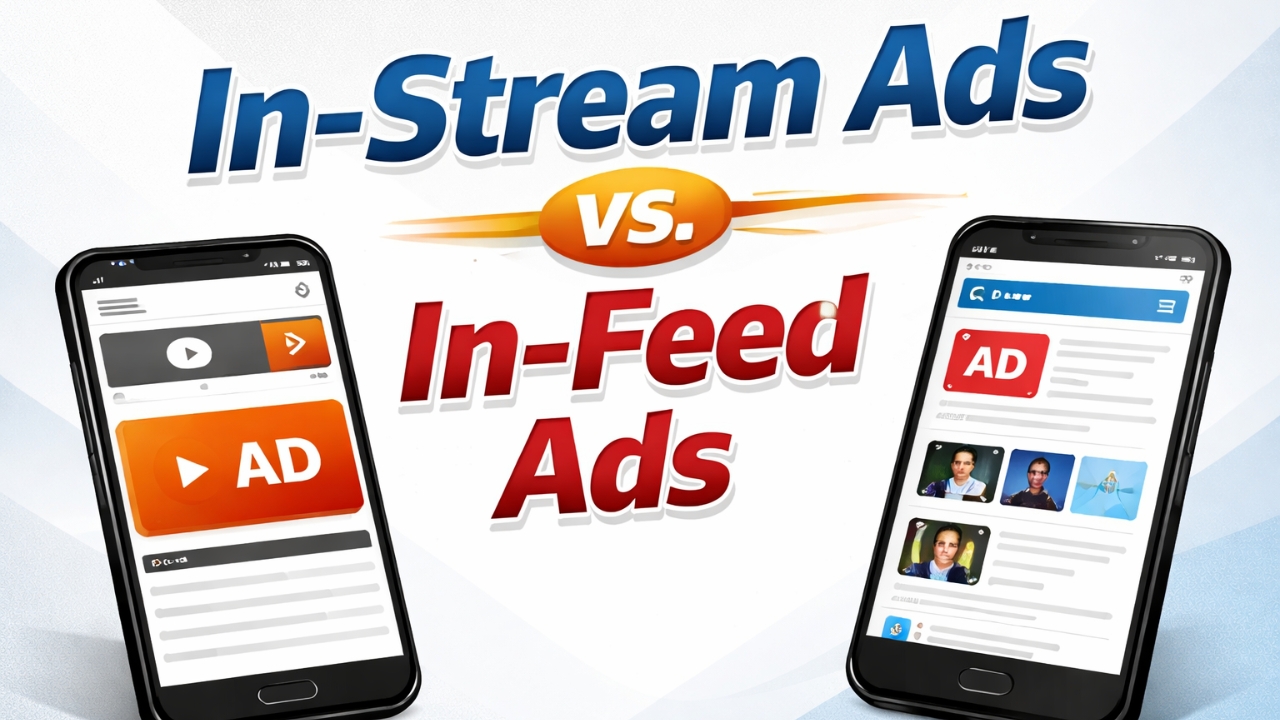
Running YouTube ads but not seeing results? Many creators and businesses struggle because they choose the wrong ad format for their goal. Understanding In-Stream Ads vs In-Feed Ads In Google Ads is critical if you want to maximize your advertising ROI and stop wasting money on ineffective campaigns.
If you are confused about which YouTube ad format works best for views, subscribers, or product sales, this guide will break down the strategic difference between these two formats and help you choose the right one.
Key Takeaways
📌 In-Stream Ads play before, during, or after videos and are best for brand awareness and reach
📌 In-Feed Ads appear inside YouTube search results and recommendations
📌 Creators looking for targeted viewers often benefit more from In-Feed Ads
📌 Businesses wanting maximum exposure usually prefer In-Stream Ads
📌 Choosing the wrong format can significantly reduce your advertising ROI
Watch the Full Video Guide
For a complete explanation of these ad formats, watch the full breakdown from Top 3 By Rahul below:
Understanding YouTube Advertising in 2026
YouTube has evolved into one of the most powerful advertising platforms in the world. Businesses, creators, and brands use YouTube ads to:
- promote products
- increase channel subscribers
- generate leads
- build brand awareness
However, success depends on choosing the right ad placement for your goal.
The two most commonly used formats are:
- In-Stream Ads
- In-Feed Ads
While they may sound similar, their user behavior, targeting strategy, and effectiveness are very different.
What Are In-Stream Ads?
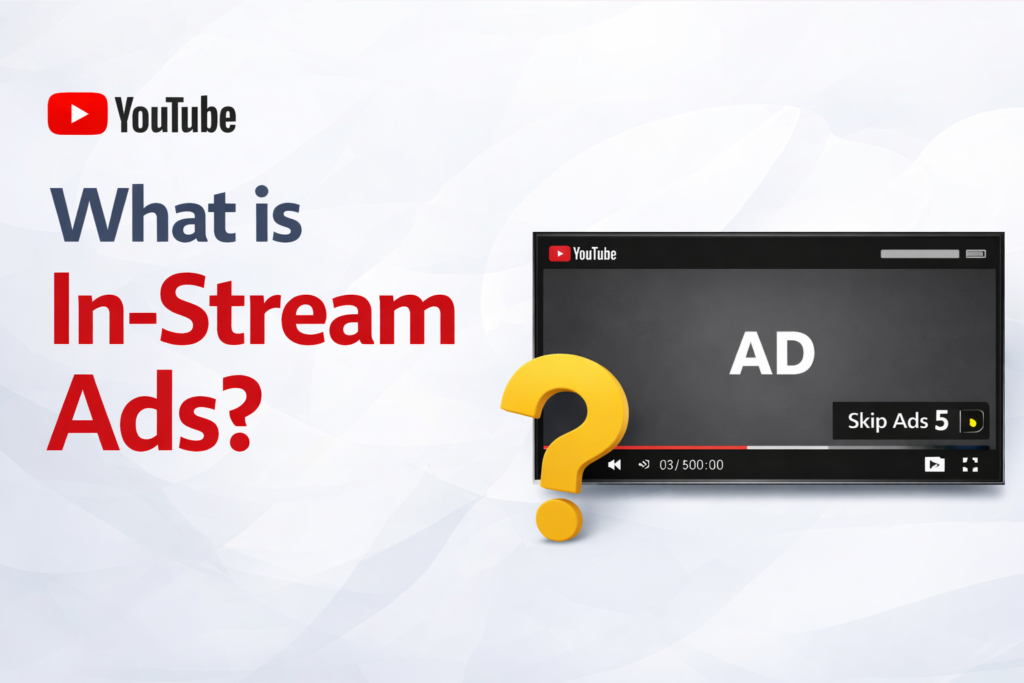
In-Stream Ads are the ads that play before, during, or after a YouTube video.
Most users are already familiar with these because they appear before the content they want to watch.
Where In-Stream Ads Appear
- Before a video starts (pre-roll)
- During a video (mid-roll)
- After a video ends (post-roll)
These ads can sometimes be skipped after a few seconds depending on the campaign settings.
Advantages of In-Stream Ads
In-Stream ads are particularly powerful for broad reach and brand exposure.
Key benefits include:
- Massive audience reach
- High visibility
- Strong brand awareness
- Effective for storytelling campaigns
These ads interrupt the viewing experience, which means users see your message immediately.
Limitations of In-Stream Ads
Despite their reach, In-Stream ads have a few limitations.
Some viewers skip them quickly, which can reduce engagement.
Challenges include:
- Lower intentional engagement
- Users may skip the ad
- Less targeted viewer intent
This format is powerful for visibility, but not always for intent-driven clicks.
What Are In-Feed Ads?
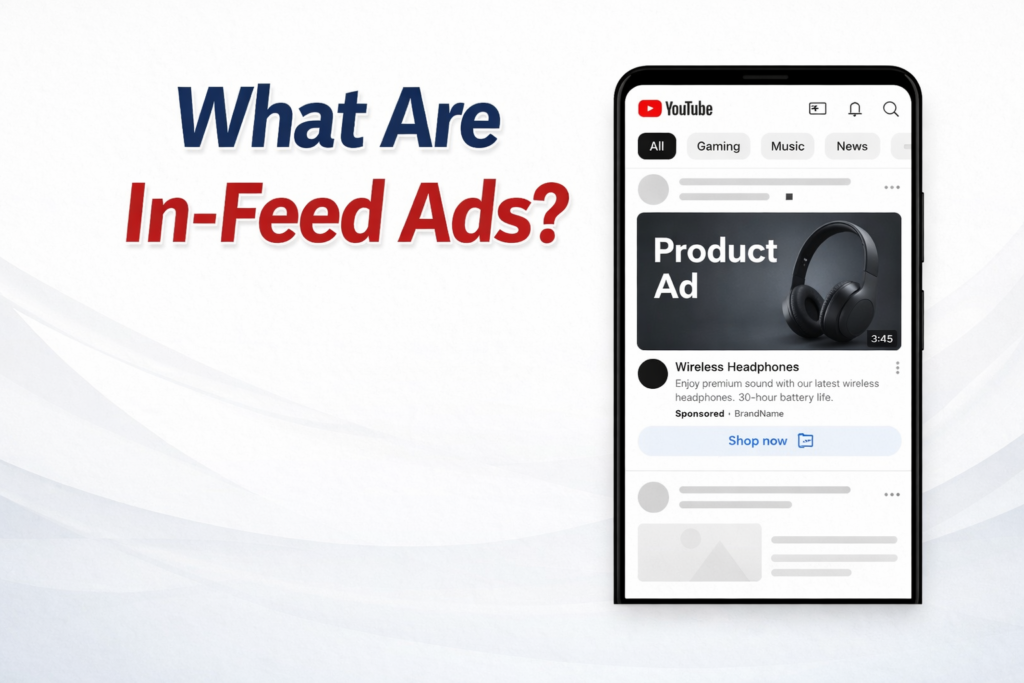
In-Feed Ads appear inside the YouTube browsing experience rather than interrupting videos.
These ads show up in:
- YouTube search results
- Suggested videos
- The YouTube home feed
Instead of automatically playing, users choose whether to click the ad.
Advantages of In-Feed Ads
In-Feed Ads are extremely powerful when you want high-intent viewers.
Benefits include:
- Targeted traffic
- Users intentionally click
- Higher engagement rates
- More relevant audience
Because the viewer chooses to watch the video, the engagement tends to be more organic.
Limitations of In-Feed Ads
In-Feed ads usually generate less overall reach compared to In-Stream ads.
Potential drawbacks include:
- Lower impressions
- Slower initial traffic
- Requires strong thumbnail and title
However, the audience quality is often much higher.
In-Stream Ads vs In-Feed Ads: Quick Comparison
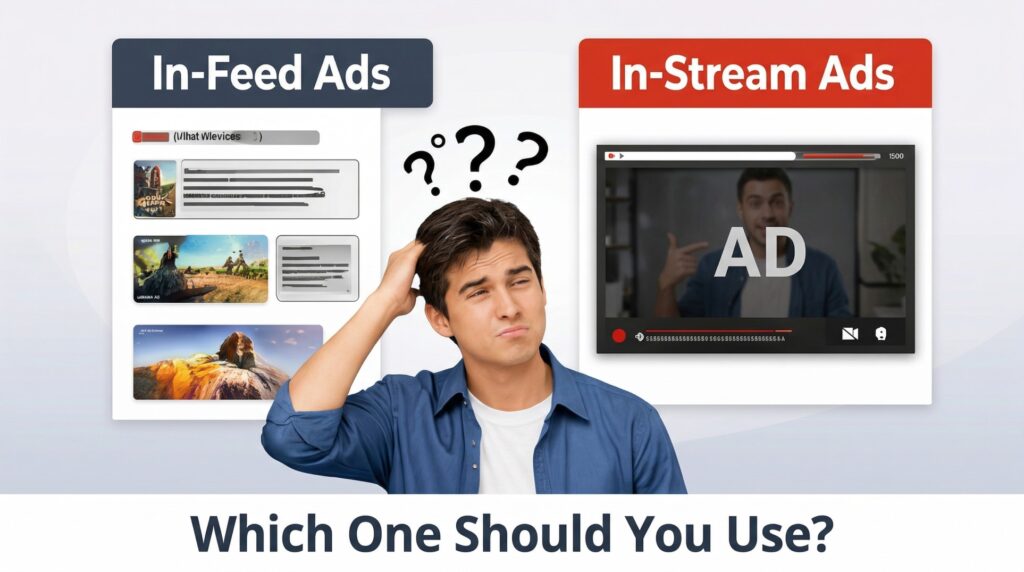
| Feature | In-Stream Ads | In-Feed Ads |
|---|---|---|
| Placement | Before or during videos | Search results & recommendations |
| Viewer choice | Often forced viewing | User chooses to click |
| Reach | Very high | Moderate |
| Engagement quality | Medium | High |
| Best for | Brand awareness | Targeted viewers |
Which Ad Format Is Best for YouTubers?
For most YouTube creators, In-Feed Ads often perform better.
Why?
Because the viewers actively choose to watch your video.
This usually results in:
- better watch time
- higher engagement
- more subscribers
Creators trying to grow their channel organically often prefer this approach.
Which Ad Format Is Best for Businesses?
Businesses often benefit more from In-Stream Ads, especially for:
- product awareness
- brand launches
- large audience campaigns
This format helps businesses reach millions of viewers quickly.
For e-commerce brands, it can be an effective way to introduce products to a broad audience.
When Should You Use In-Stream Ads?
Use In-Stream ads when your goal is:
- brand awareness
- large audience reach
- storytelling marketing campaigns
- product visibility
These campaigns work best when your objective is maximum exposure.
When Should You Use In-Feed Ads?
Use In-Feed ads when your goal is:
- targeted traffic
- YouTube channel growth
- highly engaged viewers
- educational or tutorial content
This format works well for creators and businesses focused on quality viewers rather than just impressions.
The Biggest Mistake Advertisers Make
Many creators and businesses lose money because they choose the wrong format for their objective.
For example:
- Using In-Stream ads when they want subscribers
- Using In-Feed ads when they need mass reach
The key is to match the ad format with the marketing goal.
Frequently Asked Questions
What is the difference between In-Stream and In-Feed ads?
In-Stream ads play before or during videos, while In-Feed ads appear in YouTube search results and recommended content.
Which YouTube ad format is better?
It depends on your goal. In-Stream ads are better for reach, while In-Feed ads often deliver more engaged viewers.
Are In-Feed ads good for YouTube channel growth?
Yes. Because viewers choose to watch the video, these ads often bring more relevant audiences and better watch time.
Do In-Stream ads get skipped?
Yes. Many In-Stream ads are skippable after a few seconds, which means engagement depends on how strong your opening hook is.
Final Thoughts
Understanding the difference between In-Stream Ads and In-Feed Ads can significantly improve your YouTube advertising results. Both formats serve different purposes. If your goal is maximum reach, In-Stream ads can be powerful. If your goal is engaged viewers and targeted traffic, In-Feed ads may be the smarter option. The key is to align your ad format with your marketing objective.